

Last week, I looked at the 2026 running back class. The class was, in short, a tad homogenous, with only one true standout in Jeremiyah Love. While some value-pick candidates certainly popped, it was more or less a confirmation of how lackluster this year’s crop of RB’s is.
Yet while the RB’s seemed to be both same-y and ‘meh’, the receivers are, quite typically, anything but dull. It’s a real Baskin-Robbins receiver class, with each guy being their own unique flavor of prospect.
Defining ‘hits’ and ‘busts’
To start things off, let’s look back to a piece I wrote last year. In it, I defined the Shakir Line—named after Bills wideout Khalil Shakir—which is a tool for evaluating receiver prospects. To clear it, a guy must put up over 300 total PPR points across his first three years in the league.
While I tried hard to find different alternatives, the Shakir line was still the best metric I found. There’s still a bit of squishiness to it, as 300 PPR isn’t a perfect cutoff, with a lot of guys in that range blending together. Yet I still found it to be a better evaluation tool than anything else I tried, including multiple best-season and per-game-rate statistics.
Like with our RB’s, I’m also going to utilize Next Gen Stats’ NGS Score, a pretty solid metric that’s good for multiple reasons. First, it’s good at filtering dudes out, and is better than any other stat I tried at differentiating between players. Second, it’s publicly available, so you don’t have to pay to see what I’m talking about; you can check it out here.
The rules of the game
Now that the ground rules are set, how do we figure out which receivers are likely to succeed? NGS Score provides us with a massive, immediate win: if your NGS Score is below 77, you’re probably cooked.
While this means we won’t be focusing on some lower-tier prospects in this piece, it’s for good reason, given nearly 80% of players below that threshold bust out. If you still want to get granular with the also-rans, check out my broader analysis of last year’s WR class, as well as the process behind my receiver model.
Clearing the NGS Score bar isn’t an automatic pass, either. As an additional hurdle, you still have to register an aDOT below 11.4, too. This helps weed out the false signals many deep-threat prospects can send us. Failing that, you need to be at least 6’3” tall, which tracks: if you’re gonna be a deep threat, you’d better be tall, and not just some scrawny speed guy.
The rules, made simple
If this still seems a bit too math-y, let’s reframe in even simpler terms. Here are our final heuristics, in plain English, with ‘baseline’ used as shorthand for NGS Score:
Bad baseline —> lock to bust
Non-deep threat, good baseline —> lock to hit
Tall deep threat, good baseline —> likely hit
Shorter deep threat, good baseline —> likely bust
Again, I think these all align pretty well with conventional wisdom, and specific examples later on will help solidify this notion.
A 2025 Refresher
Before we delve into the ‘26 class, though, how about a little amuse-bouche? Though we’d need three years’ worth of NFL data to fully evaluate players, I think it’s still instructive to see how our rules apply to past years. While a player or two might have slipped through the cracks, these are the most relevant 2025 WR’s, the guys people actually used a pick on in rookie drafts.
The hits
First, the guys flagged as probable hits:
Excepting Noel, I think all of these guys are pretty solid bets for fantasy success, even if their actual, real-world impact on their team might be a bit smaller. For various reasons, they seem like the kind of guys who will get you enough PPR volume to be worth the investment.
Two other interesting cases are Jayden Higgins and Tetairoa McMillan. They demonstrate why height, in specific, is an extremely useful filter when trying to figure out the deep-threat problem. It seems like a tired old adage: if a guy’s gonna be a consistent downfield playmaker, then he’d better be big and tall.
But that’s what the math shows, albeit with some asterisks. Higgins sometimes played below his size in college, which was borne out by his subpar man/press numbers. T-Mac, by comparison, definitely didn’t play small, but his production was troubling (though you can chalk that up to poor QB play).
Yet these dudes just look like NFL receivers. To be sure, height is firmly not a prerequisite in general for success, and there’s plenty of room for guys like Jaylen Noel who are excellent athletes in every regard but size. But if it looks like a duck, and if it quacks like a duck, it might well be a duck, even if there’s still some room left to grow.
The busts
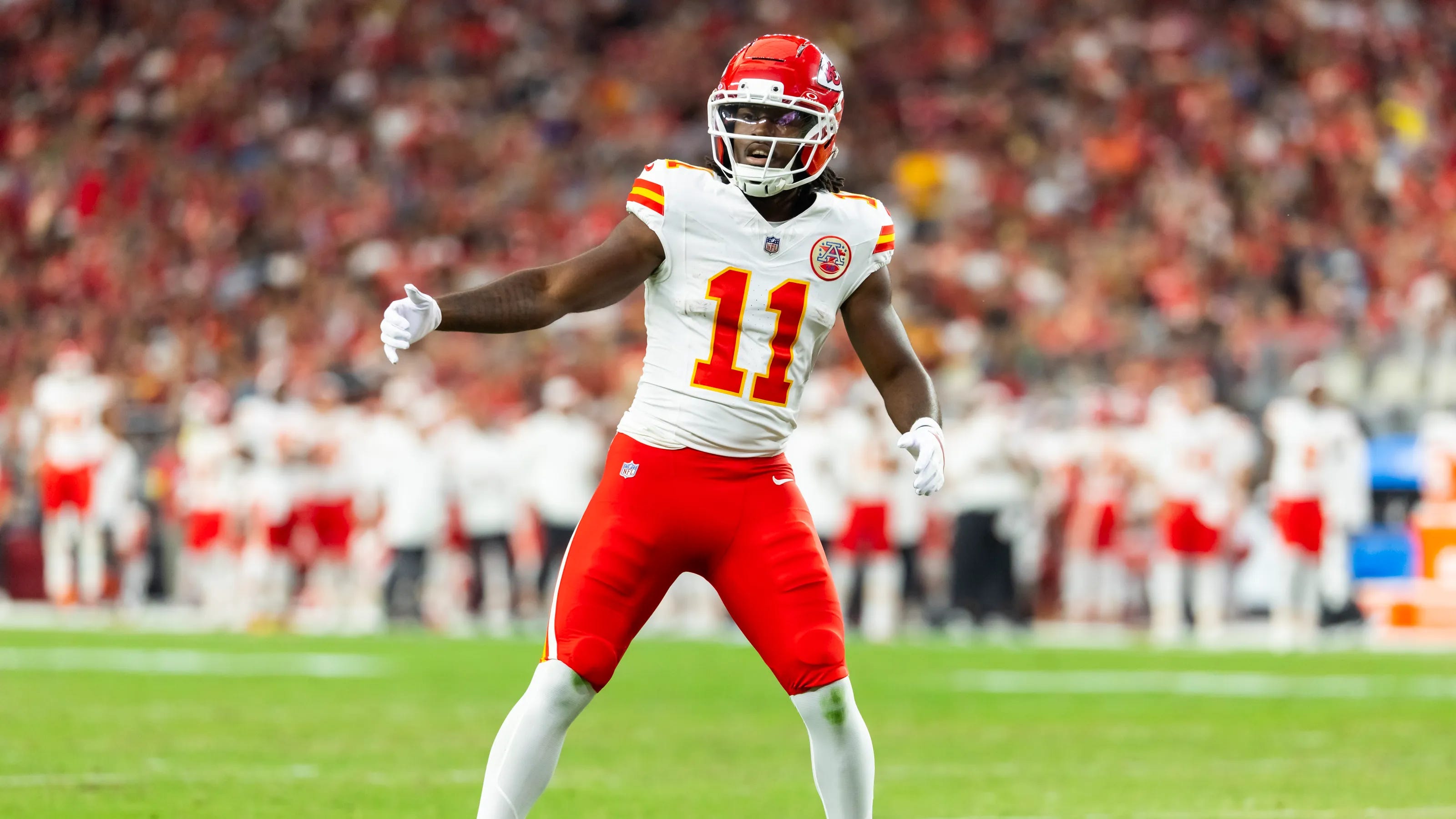
Just as the hits contain some clear-cut, big-bodied X receivers, the busts feature a lot of undersized deep threats. Some of these are guys who often look like the real deal—e.g., they’re still over 6 feet, with real traits—but fall short for numerous reasons. Others, by contrast, are clearly straight-line speed merchants, like Andy Isabella, or Jalen Reagor, who ran a blazing 4.22 at his pro day.
These precedents seem incredibly relevant to the 2025 class. Many of its potential busts already looked shaky based on charting alone, with Tre Harris and Jalen Royals in particular running limited route trees in gimmicky offenses. Ayomanor, meanwhile, had similarly iffy charting data, but without the production to back it up.
Perhaps you can chalk it up to very poor QB play, but it’s still hard to ignore just how much worse Ayomanor’s collegiate stats were compared to his peers. While he ran, incredibly enough, nearly as many routes in 2025 as Tetairoa McMillan, he was nearly 200th in catch rate. Even if you factor in QB, the fact of the matter is‚ Bryce Young and Cam Ward were both pretty bad last year; T-Mac vastly outproducing Ayomanor thus speaks volumes to their talent gap.
Maybe the most surprising potential flop here is Matthew Golden, given my receiver model liked him quite a bit. His charting data was solid—he’s less limited than most deep threats—and his 40 time was out of this world. Yet his speed and youth carried his profile hard, papering over his slender frame and weak college production. Given those two things are very related (his production is low because he was injured), his injury-proneness continuing into his NFL career is an ill omen, to say the least.
The 2026 Class
With all these rules out of the way, we can finally classify the notable 2026 prospects. Again, the guys with an NGS Score of below 77 are being saved for when I release my model, given their high implied bust rate. Thus, if you want in-depth analysis on them, be sure to subscribe (it’s free!) and watch this space.
Above, we see which WR’s with an NGS Score above 77 are in the clear (i.e., their aDOT is below 11.4, or to the left of the red area). Overall, this is a deceptively diverse group: while a lot of these guys are very clearly slot-only players—namely Concepción and Branch—we also have some shorter X’s, as well as some tweeners, like Skyler Bell. And while some of these guys have ADOT values closer to the threshold, the fact that they aren't only deep threats demonstrates their real viability on the outside.
Perhaps the most shocking potential bust is Jordan Tyson. This is despite a very high NGS score of 86, as well as his standing as a likely top-20 pick in this year’s draft. There are eerie parallels here, frankly, to Matthew Golden from last year’s class—a similarly often-injured prospect whose hype was difficult to reconcile with his meaningful flaws.
Now, they are different kinds of prospects, with Golden being more of a gimmicky speedster. My model also really liked Golden last year, and I think we’d be remiss to close the book on him. Yet Tyson’s injuries are even scarier than Golden’s were, and while he’s still a pretty exciting prospect, it’d be scary taking him at his current price.
Size matters
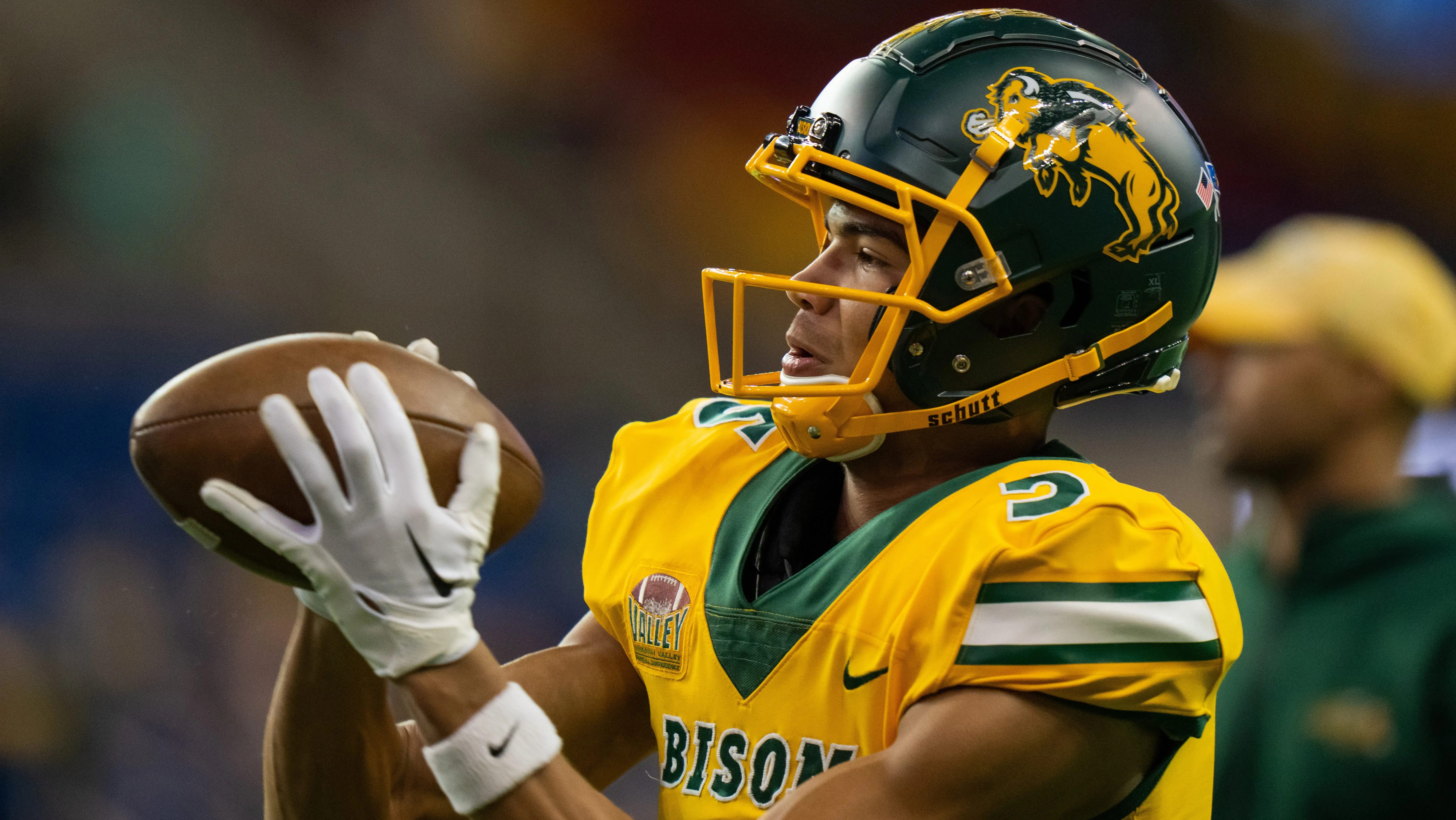
Now, we’ve already seen which short-area threats are primed to pop; what of the deep threats? Of the four nominal hits below, Denzel Boston and Bryce Lance feel the most conventionally obvious, with the latter being a particular traits freak. It’d be fitting, frankly, if NDSU product Lance—who, at an 86 NGS Score, boasts the same grade as Tyson—outpaces Tyson in the same way his fellow Buffalo, Christian Watson, overshadowed Matthew Golden last year
As for the other two hits—Brazzell and Caldwell—I might want to pump the brakes a bit. When talking about receivers specifically, it’s helpful to understand what kinds of profiles exist, and why players who fit them might not succeed. Over the last couple of years, as we’ve seen more and more dazzling combine performances, many of these nominal “traits gods” fail to translate their game to the NFL (or have some initial success, then fall off later).
This is all to say that both these guys look a lot like Brian Thomas Jr., which, while nominally a good thing, comes with major caveats. BTJ looked like he was on his way to becoming the next Calvin Johnson after a stellar rookie season, but he fell off hard in his second year.
Many pundits have attributed BTJ’s fall-off to his unwillingness to take contact across the middle of the field. While I think that, in his case, it may be more psychological than physical, he still boasts roughly a 25th percentile BMI, while Caldwell (10th percentile) and Brazzell (5th percentile) are even slighter. BTJ’s miserable bench press performance also speaks volumes to his play strength issues, so Caldwell and Brazzell shirking that test bodes ill for their prospects in the league.
The Tate dilemma
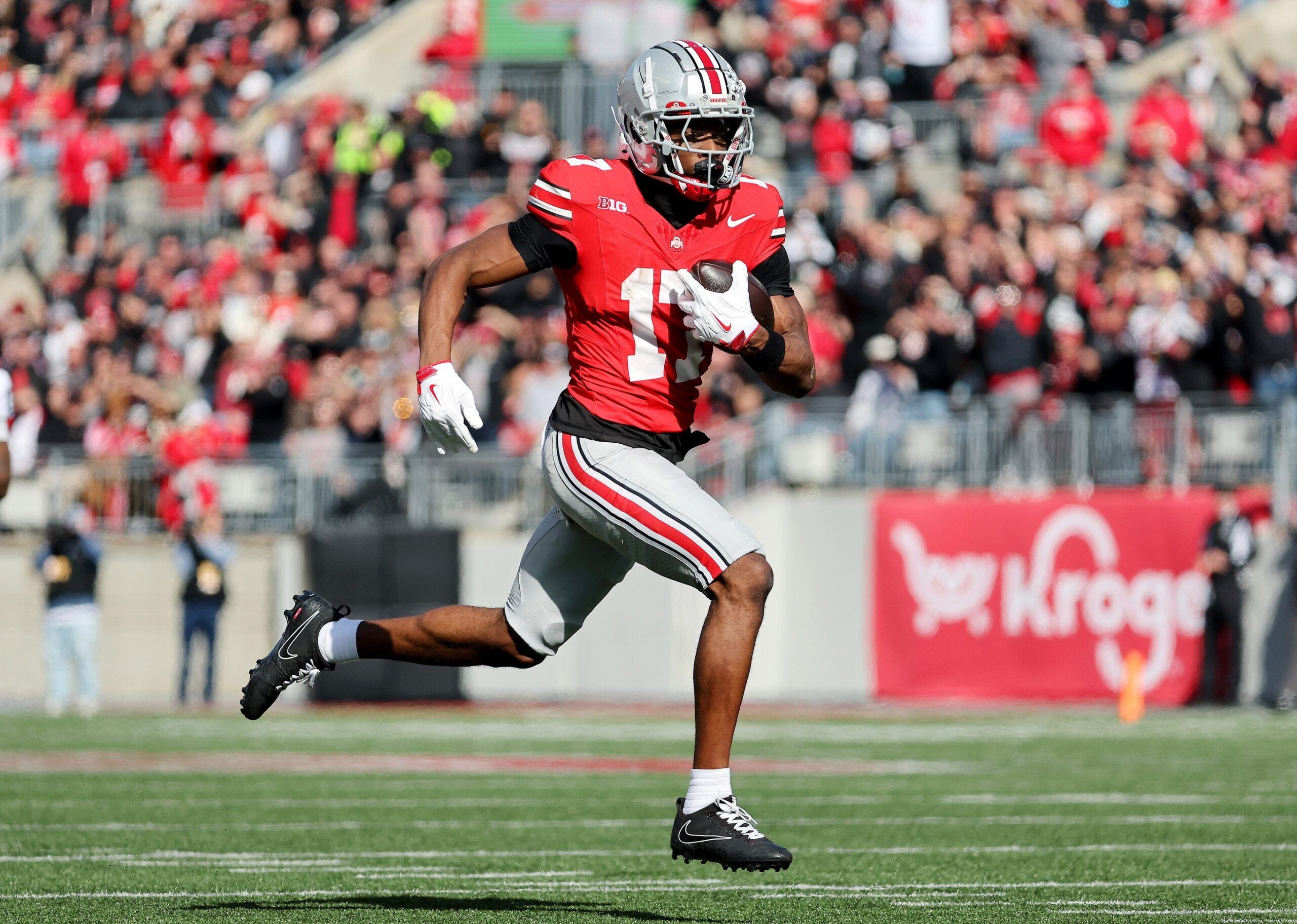
Let’s now pivot from some dubious ‘hits’ into a questionable ‘bust’. While our metrics are down on him, I’d probably give Carnell Tate some grace, especially given he’s a potential top-10 pick in this year’s NFL draft. Granted, his height’s a tad below where you’d want someone of his aDOT to be, but you could also chalk up his deep-threat role to the overabundance of receiver talent at OSU.
I’m eager to see how my updated model will rate him, because while I definitely think his slightly below-rate height and deep target share should give us pause, I’d be apprehensive about writing off this year’s top receiving prospect. At the same time, however, the skepticism may not be that far-fetched, given he lives right on the 77 NGS score threshold we set earlier.
It’s pretty likely, then, that he’s just as much of a fringe case as our BTJ-flavored guys, requiring you to overlook some pretty big warning signs. As a fantasy prospect, it ultimately might not matter a whole lot; as long as he isn’t putting up, say, Kevin White numbers, a guy who goes top 10 in the NFL Draft is going to get a lot of targets in the league. But as an actual player, there’s certainly grounds for caution, and based on our metrics, he doesn’t quite feel like a guy you should bet the farm on.
Parting thoughts
Overall, I found writing this article to be a productive thought experiment, and hopefully, you found the results useful, too. Maybe the final metrics I presented seem fairly simple to you, even reaching the point of near obviousness. Yet the process to get there was anything but, with a lot of false starts and dead-end alleys I had to explore before I got to a decent result.
To be sure, there are still some major caveats to my findings, and I don’t think these rules are ironclad. If anything, they’re meant to be used in concert with models, tape, and your own judgment; they’re tools meant to guide rather than constrain. The ideas in this article are meant to inspire deep dives, and are not meant to be the final word on a guy.
Yet all in all, I’m still pretty happy with how this piece turned out. While you should never let your biases guide your analysis, it’s pretty exciting when, incidentally, you end up with something that confirms your existing beliefs. Maybe it’s something as simple as speedy deep threats being fool’s gold, or tall dudes being superior downfield options.
But every little bit of knowledge helps in fantasy football, each new tidbit giving you an iota of leverage to wield over your leaguemates. Hopefully, too, that brings you another step closer to the ultimate goal of a championship.
Insightful, as usual
This is great work! I loved this article. I would love to know how you came up with the model. I am also curious if this could be applied to young college football players for those who play Devy and C2C formats.