

As we get deeper into the dynasty offseason, many managers have already drafted, and are heading into the waiver period. While I’ve built many predictive models this offseason that cover most relevant dynasty rookies, however, there are still some undrafted free agents I haven’t covered yet in an article.
The issue, of course, is that predicting undrafted free agents can be a bit finicky, specifically because of how few of them actually get the chance to make rosters each year. To address this, I’ve decided to be smart in my approach, using the best signal we already have: consensus big boards.
Using MockDraftDatabase’s consensus board, we can get a decent idea of prospect caliber. It’s worth noting that many UDFAs are actually late-round-quality players that go undrafted solely because of pre-draft handshake deals with teams. By targeting the best of them, we’re already selecting for players likely to not only make their team, but see success in the league.
Historical cases
While undrafted receivers warrant an equal amount of attention, this week, the focus is running backs. As we’ll see shortly, big-board pedigree is a fairly strong signal for this position in a multitude of ways.
Right off the bat, we can see that, of the top five UDFA backs since 2016 (3-year PPR scoring), four were ranked on the consensus big board. Lindsay (consensus rank: 232) and Robinson (267) exemplify how, quite often, the crop of undrafted guys still contains many players of firmly draftable quality.
Ekeler, too, is an edifying example, given he’s often framed as a chance discovery who lucked out after attending another school’s pro day. Yet by the time of the draft, he was ranked inside the consensus top 400, so he was certainly on teams’ radars by then.
Sticking around
There’s a catch, of course; as much as I’d like to say you should just draft big-board guys, the story is a bit more nuanced than that. While I like predicting three-year rookie outcomes for stability reasons, none of that matters if a player is off your team a year from now.
Luckily, if there’s anything our big board measurements are good at, it’s figuring out which players will stick on rosters. While 30 PPR points over year one may seem like a fairly arbitrary metric—there are some clunkers who get over that bar, to be sure—it still captures most players who break out later. JaMycal Hasty, Jordan Mason, and Malik Davis are all names that fantasy managers are familiar with by now, for example.
Note, too, this threshold was anecdotally checked against KeepTradeCut values for guys who surpassed 30 PPR in their rookie years. While there were definitely still fringe dudes, most of these guys ended up valued at over a thousand points on KTC, roughly the equivalent of a dynasty fourth-rounder. This implies these are guys you’re fine carrying into year two, so the 30 PPR benchmark seems to be a sound one.
As you can see on the chart above, of these bar-clearing players, 66% of them were on the consensus big board in some capacity (though some of them ranked in the 400s.) The balance between ranked and unranked guys who ultimately became stars—or at least useful contributors—is a bit more even. While more on-board backs eventually became real players than off-boarders, the sample size is much smaller.
Still, the point remains: it doesn’t matter if a guy is a huge success later if he’s not somebody you’d carry throughout their first year in the league. Thus, in terms of process, it’s almost certainly better to go on-board with these guys. Better yet, really, to hone in on guys from the top 400, since that seems to be a prerequisite for top-flight success.
2026 UDFA RBs
Now that we understand the advantage being a big-board favorite offers UDFA’s, let’s see how these guys look through the lens of my running back model. For those unfamiliar, to there are a few main inputs that get fed into it, many of them coming from a player’s best points-per-game season.
Two of these focus on focus fairly strongly on receiving ability, the first of them being targeted QBR. The second is combined PFF grade, which sums together a player’s offensive and route running grades to give their performance as a pass-catcher greater importance. I also include their elusiveness rating, which measures their ability to avoid tackles.
Finally, our most important input is their draft capital, which usually uses where players actually went in the draft. However, since we don’t have that information, we’re substituting their mock consensus rank (MCR) instead. While this is a bit awkward, it’s worth noting that our draft pick variable is log-scaled to give later players in the draft less weight. Thus, since most of these backs were already mocked as late-rounders, their traits—as well as on-field production—get a chance to shine.
At the top of our list is Desmond Reid, who I called out in a pre-draft analysis of the 2026 class. Reid, as I then noted, is a massive size outlier, who, despite showing explosive ability on the field, notched a brutal 4.58 time on the forty-yard dash. This obviously caused the league to sour on him (if they hadn’t already), and is, almost certainly, a major reason why he went undrafted.
Still, I wouldn’t be surprised if Reid made some sort of impact in a smaller role, but I’m not sure what’s in store for him at the next level, either. Ultimately, he’s the only RB in this group to grade out as a “real” prospect, with his score of 43 (i.e., our model rates him as better than 43% of prospects since 2016) placing him firmly in the middle of a weaker class.
In second place is new Jaguars back J’Mari Taylor, who showed solid receiving ability and elusiveness. However, like Reid, his testing elicits real cause for concern, having posted a miserable 4.66 in the 40-yard dash. Still, it’s noteworthy that our model vastly prefers Taylor to Oklahoma back Jayden Ott, despite them sharing almost identical draft capital (207 vs 209).
So far, these guys seem pretty underwhelming; it’s hard to get excited at guys taking roughly 4.6 seconds to run their forty-yard dash, after all. The next guy, however, is the antithesis of those other two backs, sporting a 9.7 RAS and a speed score of 100. This back, of course, is the Rams’ Dean Connors, who clears the bar as a receiver and only falls short in terms of elusiveness.
There are drawbacks, of course: Arif Hasan of Wide Left only gives him an 8% chance of making the team. The Rams already have three established backs on their roster, too, with last year’s pick Jarquez Hunter demonstrating a near identical 40 time. Connors rates better in terms of explosiveness, size and agility, however, and can give the Rams a bit of juice their other Steady Eddies lack.
A puncher’s chance
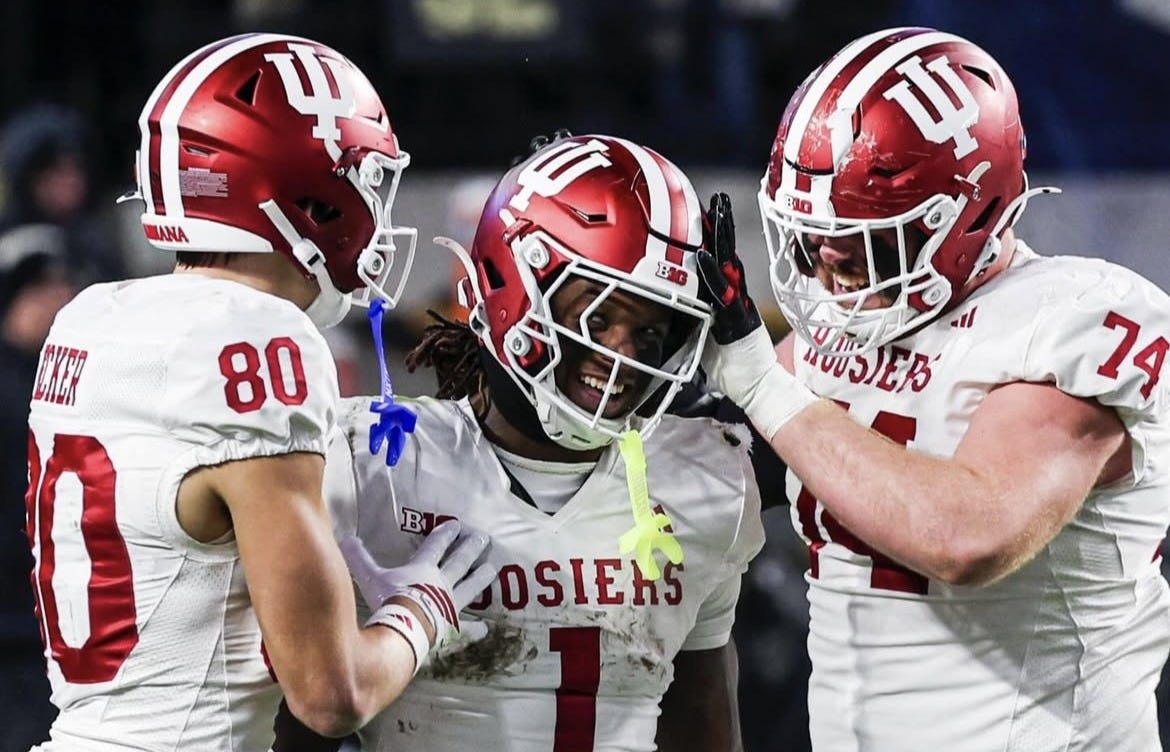
If Connors’ 8% roster chance seems dismal, then there are, at the very least, two other players my model rates as ‘draft-caliber’, with real shots at making the roster. We again turn to Wide Left’s roster projections, which give Indiana’s Roman Hemby (MCR: 249) a 19% chance of making the Raiders, while the Commanders’ Robert Henry Jr. (MCR: 259) is at 18%. Though these sound like long odds, it’s worth noting that the typical ceiling is roughly 25%, making Hemby and Henry among the likeliest UDFAs to make their respective teams.
At first blush, Hemby seems fairly lackluster due to his very low elusiveness reading, matching what prospect evaluators have called a “stiff” running style. Yet he still looks to be a pretty sturdy back, with an excellent targeted QBR based on his best season at Maryland. As many draft wonks have noted, he has limited upside as a pass blocker, but as a receiver he has real potential: he caught 97% of his targets in the 2022 regular season.
He feels, in short, like the prototypical late-round guy who will stick, and is one of the few players here who rates as a firm seventh-rounder (per Dane Brugler of The Athletic). Hemby reaching 16th in Brugler’s rankings means less in a weak running back class, of course, but it’s offset by just how spare the Raiders’ running back room is. If he makes the team, I think Hemby can be a perfect complement to fellow backup Mike Washington’s home-run potential.
As for Henry Jr., he's an equally worthwhile swing, given the Commanders show little qualms with elevating lower-status players to the top of their depth chart. While not quite the antithesis of Hemby, Henry Jr. shows a lot of traits the IU product lacked. Namely, Brugler noted that Henry was a "willing blocker," and despite his just-okay testing numbers, he broke off multiple explosive plays at UTSA.
There are downsides to Henry’s profile, chief among them being that Henry is as undersized as Hemby is formidable. Yet in a wide-open Commanders backfield, it's anyone's guess what will happen; furthermore, despite Rachaad White being the incumbent receiving back, there's an obvious long-term need to fill given Kaytron Allen's rushing-first profile.
Deep cuts
With just a few backs to go, we’ve hit the bottom of the barrel, with all the remaining players failing to garner a “draft-caliber” rating from my model. The clear leader of the pack is Noah Whittington (MCR: 275), graded as a sixth-round talent by Brugler. Yet his profile is pretty subpar: his PFF grade is firmly below average, his targeted QBR is merely passable, and his elusiveness is firmly poor.
Ironically, though, he might be one of the better bets to make his team’s roster, given how weak the Texans’ depth chart is. Hasan’s math concurs, giving him roughly a 20% chance of sticking, and we can’t ignore how scouts are much higher on Whittington than my numbers. This makes him, at the very least, worth an upside swing in deep leagues, but he’s still not a guy I’d readily go to bat for.
A Newer RB Model

Predicting running backs is, in many ways, a paradox. The secret sauce is easy to figure out: league success is heavily contingent on a back’s college production, with receiving prowess being a particularly strong signal. Maybe you can add a bit of athletic testing in for good measure, but the overal…
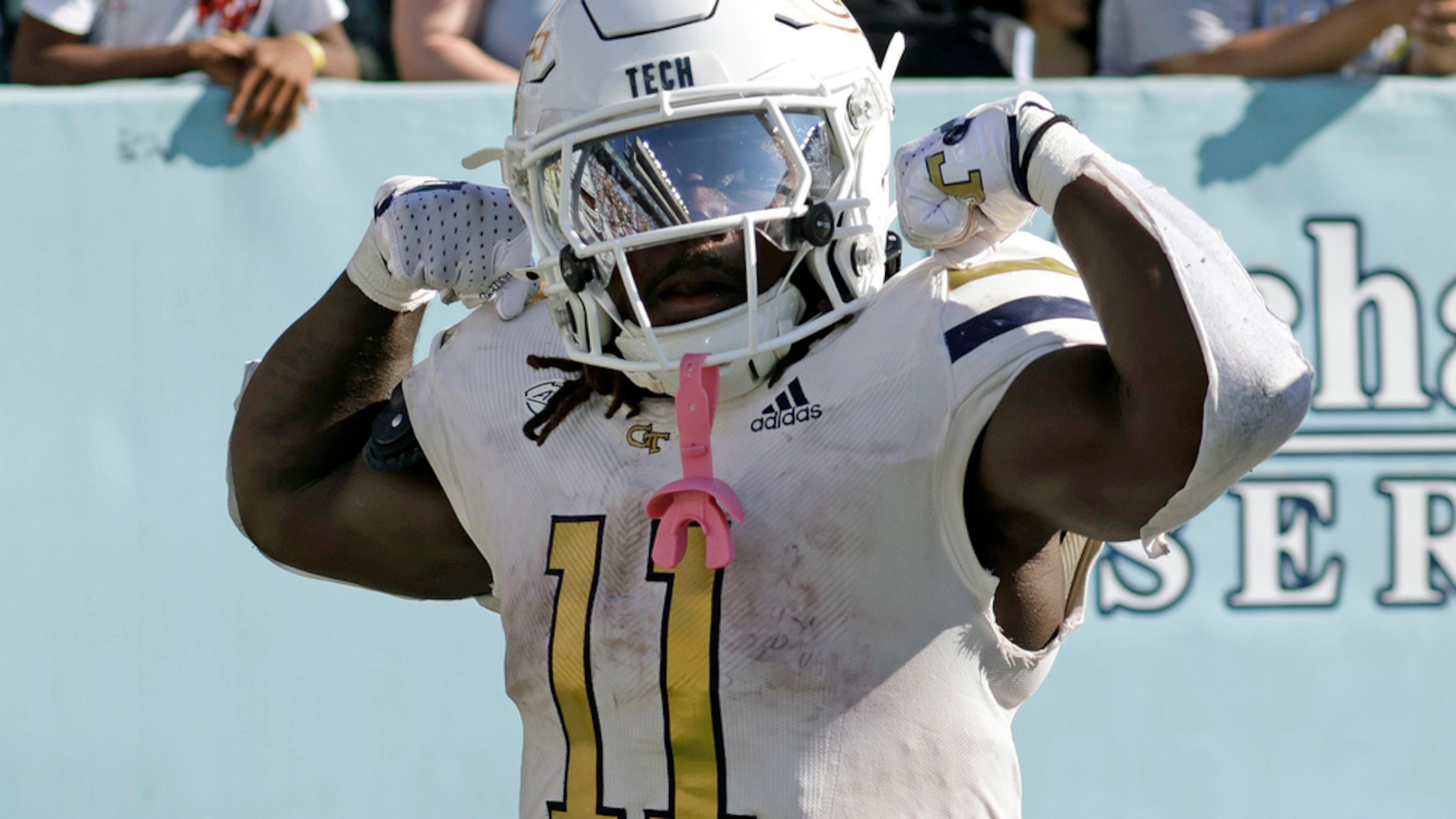
One guy I can go toe-to-toe with scouts on, however, is Georgia Tech’s Jamal Haynes. Being a fan of two college teams with consistently superb, NFL-quality backs over the years (SDSU and Georgia Tech), I’m fairly confident in my ability to rate the flaws and strengths of players I’ve actually set my eyes on. The verdict? I think Haynes has real juice, and requires much less squinting than these other guys do.
My math, it seems, agrees. Though I haven’t included its projections in the previous table, I’ve previously utilized a separate upside/floor model in conjunction with my main one, in order to better estimate of a player’s range of outcomes. That model likes Haynes meaningfully more than the main model does, rating his upside closer to the Henry’s and Hemby’s of the world.
Now, there are a lot of knocks against Haynes. With a mock consensus rank of 384, he’s definitely the worst of the bunch in that regard, and he has one of the lower combined PFF grades too. Yet he’s shown to be a capable receiver—as his good targeted QBR indicates—and one of his weakest spots (his low speed score) is actually a bit misleading.
Indeed, Haynes has undeniable house-call ability that his overall 40 time doesn’t capture. The numbers back this up; while his 4.5 time is pretty middling, his 20- and 10-yard splits are quite good, with his 10-yard split in the high 99th percentile among all testers.
This isn’t a massive need for the team that drafted him, of course, given the explosive traits incumbent Bengals starter Chase Brown possesses. But it’s certainly a different element from whatever the aging Samaje Perine offers the team, and last year’s selection, Tahj Brooks, is more of a workhorse type.
Lastly, we have Chip Trayanum and CJ Donaldson. If the other backs had murkily defined NFL roles, Trayanum and Donaldson’s paths are much clearer. Trayanum, simply put, is a guy you’d want to have seen more out of after spending six years in college, especially given he only broke out in his final year at Toledo.
Trayanum tested fine, but Brugler has pegged him for his third-down and special teams upside, which isn’t really what you want to hear from a guy you’re taking in dynasty. Ditto for Donaldson, whose main upside is, per the San Diego Union-Tribune, his goal-line and short-yardage ability. Despite being a touchdown machine, however, Donaldson doesn’t really seem to be offer much beyond that.
Parting thoughts
Hopefully, over the course of this article, I’ve helped you figure out which undrafted running backs you’re in on, and which guys aren’t quite to your liking. I would, of course, caution that most of these players are better bets for deep leagues and rebuilding teams, and are best served as secondary dart throws to back up higher-bid players.
Still, I’m glad that the small crop of guys here forced me to take a harder look at each of these players. It’s been a useful exercise, and I’ve found it quite enlightening in a way that looking solely at my model’s predictions alone wasn’t. I’d like to think that’s been your experience reading this piece, too.
Stay tuned next week for my follow-up piece on receivers, and don’t be shy in reaching out on social media (capn_cc on X, juuls-verne on Bluesky) if you have any questions.