

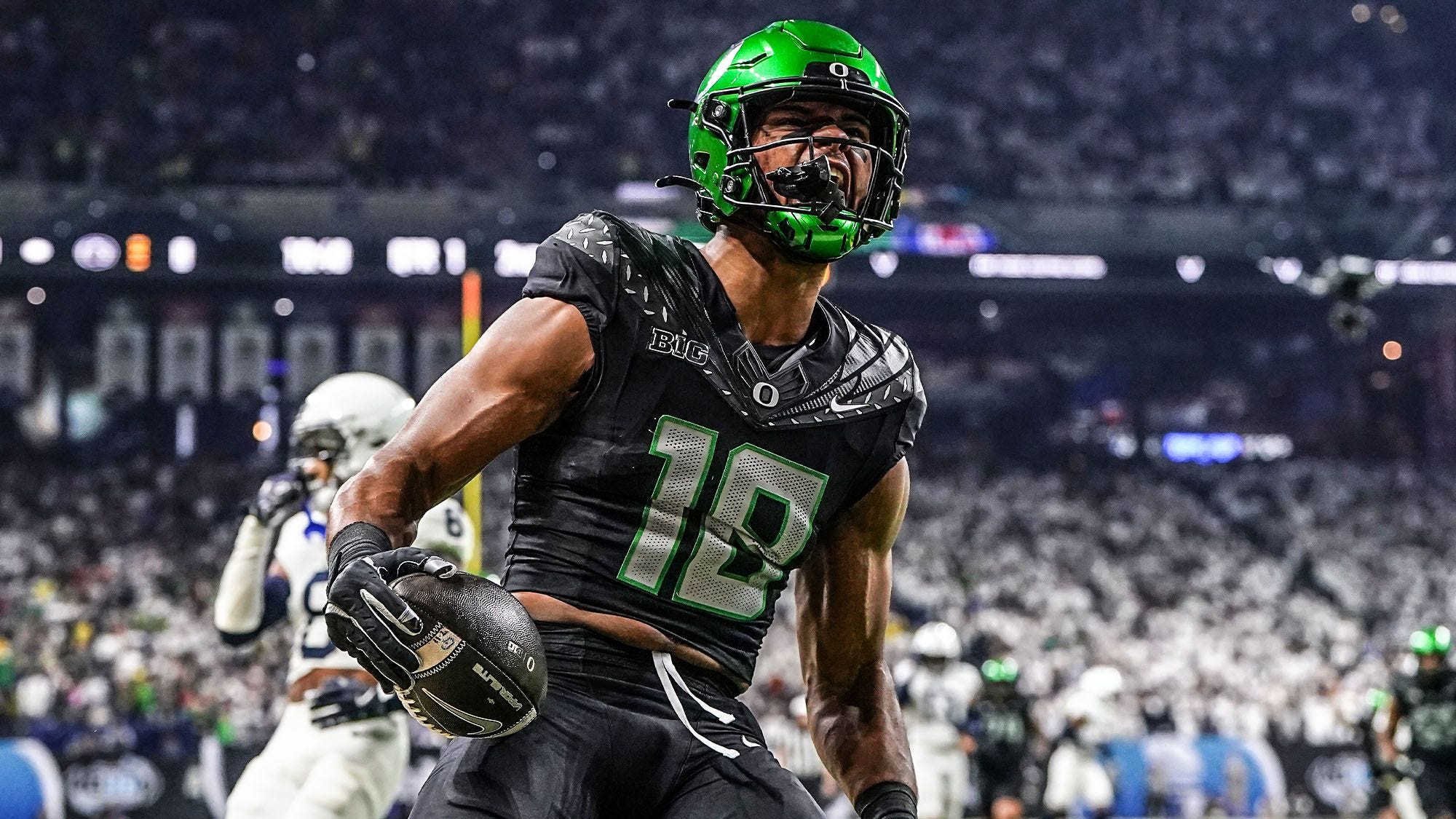
By now, the shallowness of the 2026 draft class is well known, and few positions felt this more starkly than tight end. Indeed, as we’ll see later in this piece, there was a massive rush on tight ends in the second round, with many teams reaching on guys out of fear of getting sniped. Granted, many of those teams arguably got out over their skis, but it’s still a significant indicator that tight end is a more important position than it’s ever been.
Model design
While explaining how my model works is always important, it’s especially crucial this time around. This is because while draft capital is still our model’s most important input—represented here as log pick, to give earlier picks more weight—it’s less crucial for tight ends.
Above we see my model’s inputs, ranked by importance. Draft capital is still king, while the player’s combine vertical jump results, or Vert, ranks second. Vert is chosen as our main athletic feature for numerous reasons (e.g., it’s a good explosiveness proxy), least among them being that it’s one of the few tests players still regularly run at the combine.
Close behind is PFF Grade “Sweet Spot”, which looks at a player’s two best-graded collegiate seasons, then up-weights his prediction if it falls in a sort of “Goldilocks zone” based on historical data. While this is arguably our most fragile metric, its general aim is succinct and well-motivated. We reward good grades, while slightly penalizing over-performers, as to not double-count what our other metrics are tracking.
Catch+ = (rec+cont_rec)/(tgt+cont_tgt)Our second production-based metric is Catch+, which mashes together overall and contested catch rate. This metric seems crude at first blush, given it’s just total & contested catches over the target equivalent. Yet the end result is something empirically better at separating out studs from duds than either catch metric alone. It captures the strong signal contested catch ability provides, while also smoothing out its inherent noisiness.
We also have players’ draft-year age, expressed semi-continuously so we can catch the nuance that saying something reductive like “23 = old” might miss. Finally, we have a player’s combine weight. While it is our weakest feature, it still acts intuitively, punishing heavier players (i.e., probable blockers) and rewarding lighter guys who are likelier to be receiver-first types.
Model performance
As I’ve done with each of my models this year, I first tested my TE model on three holdout draft classes to see how it’d do on unseen data. Like with my running back and receiver models, I focused more heavily on Spearman’s Correlation Coefficient instead of R-squared. While I optimized on both metrics, I think Spearman’s best answers the most important question: “does my model rank players particularly well?”
New for TE’s is the ADP comparison, roughly cobbled together from MyFantasyLeague and FantasyPros draft data. Though this is a bit rough—especially compared to the robust info from KTC and other sites these days—the approach is due to data availability more than anything. Also note that since my model predicts the first three years of a player’s career, the most recent class I have full data for is 2023.
As you can see above, my model roundly outperforms both real-life (draft capital) and fantasy (ADP) draft position. With the exception of 2023, where ADP offers a small edge over draft capital, my model usually blows both out of the water.
There are still numerous caveats to this, of course (chiefly, while model was blind to these classes’ results, I wasn’t). But as I’ll unpack shortly, I think my model’s prognostications for the 2025 class—whose ultimate outcomes both my model and I are unaware of—are quite promising.
Eagle-eyed readers might notice that I’m only ranking tight end prospects from the first five rounds of the NFL draft. I actually started by only looking at the first four rounds, since almost all NFL fifth-rounders (or later) have historically gone undrafted in standard 48-pick dynasty rookie drafts. Yet given how many fifth-rounders are likely to be picked in dynasty this year (especially in TEP leagues), I thought it useful to include.
Establishing cred
Before we dive into the ‘26 class, I want to circle back on the ‘25 class. As I mentioned in the previous section, it’s about as “pure” of a test case for my model’s viability as it gets (at least outside of new draft classes).
Overall, my model’s take on the 2025 class was fairly chalky, though there are a couple of interesting wrinkles. Loveland and Warren, as expected, hold down the top two spots, each earning an “Elite” upside designation from my model. Loveland in particular stands out, with three-year PPR projection that ties Trey McBride (our model’s historical favorite), all without my model knowing about his supernova playoffs-run performance.
Perhaps even more notable is my model’s disdain for Elijah Arroyo, who, tragically, was the one tight end I drafted across multiple leagues last year. (Note: click on the arrow above the table to tab over and see his projection). There’s a clear lesson here: production still matters (see: the more strongly favored Fannin), and if you’re going to pick a guy based on athleticism (Arroyo did have great on-field tracking speed), he’d better damn well test at the combine!
Splitting hairs
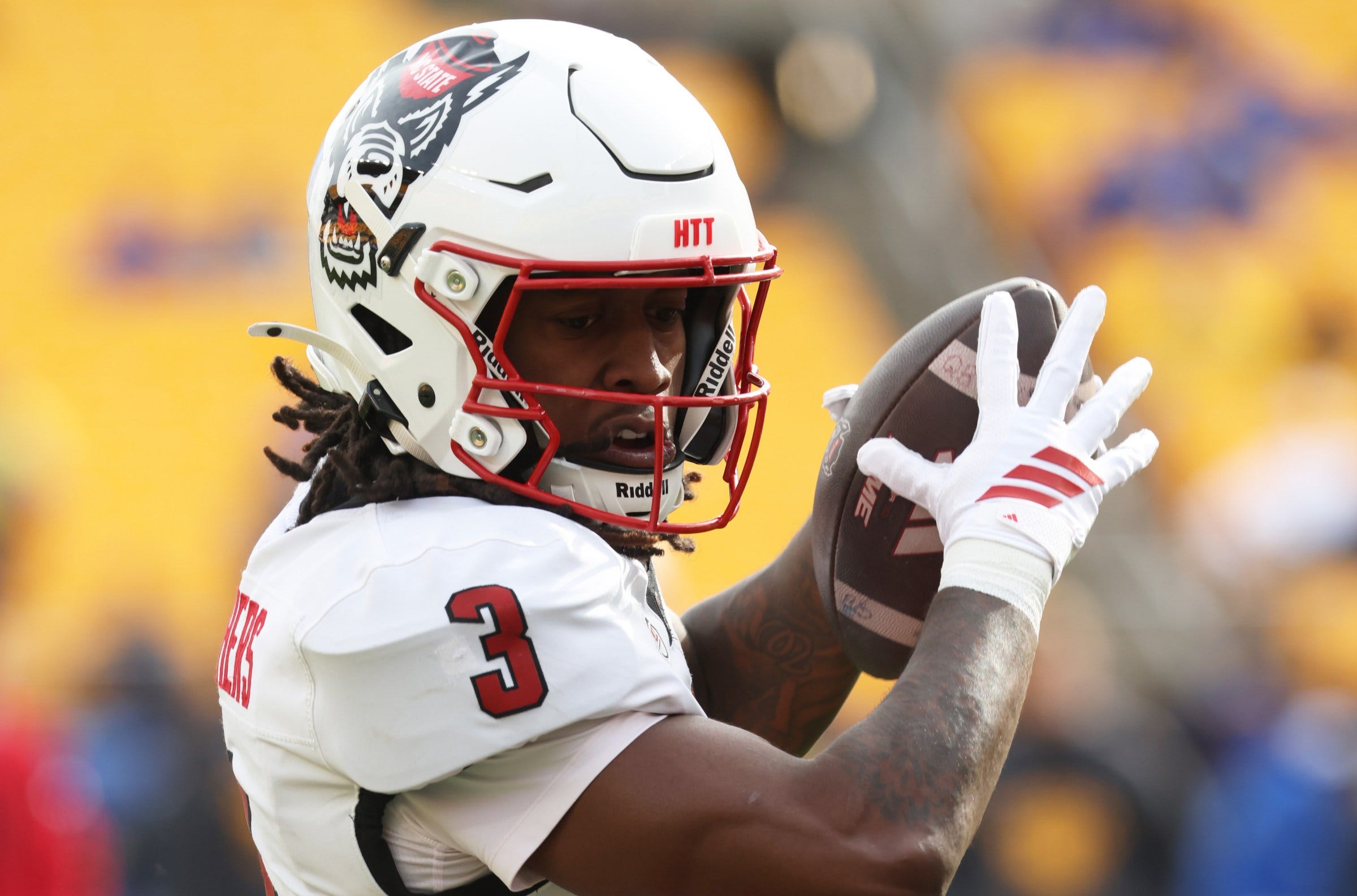
Earlier, I touted my model as beating dynasty ADP in past classes; this year, it seems, will really put it to the test. Though it’s a bit too early for dynasty rookie ADP to have stabilized, I think Expert Consensus Rank (ECR) maps pretty well to what I’ve seen in drafts so far.
The most obvious disagreement between my model and consensus is with Texas product Jack Endries, and is probably the prediction I’m least firm on. The ceiling/floor part of my model, driven largely by historical comparisons (using K-nearest Neighbors), thinks he’s much closer to other mid-round prospects based on profile alone, and many tape-first draft gurus seem to agree.
A lot of this is him falling behind some blocking-first types, like Marlin Klein, who my model is also cooler on than most. Klein is a good lens to view my model’s blocking penalties through: he’s one of four guys with a career yards-per-game below 15, which causes the model to halve his prediction. Though my model’s scope is somewhat limited—it only tracks about the last decade or so of prospects—nobody under this line has been a true breakout success, and thus I’m comfortable with it.
Justin Joly’s case is equally clear, but for a different reason (namely, that his combine vertical jump was awful). It’s a bit unfair, of course, to punish him, given he was testing on a bum hamstring. But as we learned earlier with Elijah Arroyo, making excuses for guys is an obvious pitfall, and I’d rather bet on other players ahead of him given his low draft capital.
The 2026 Class
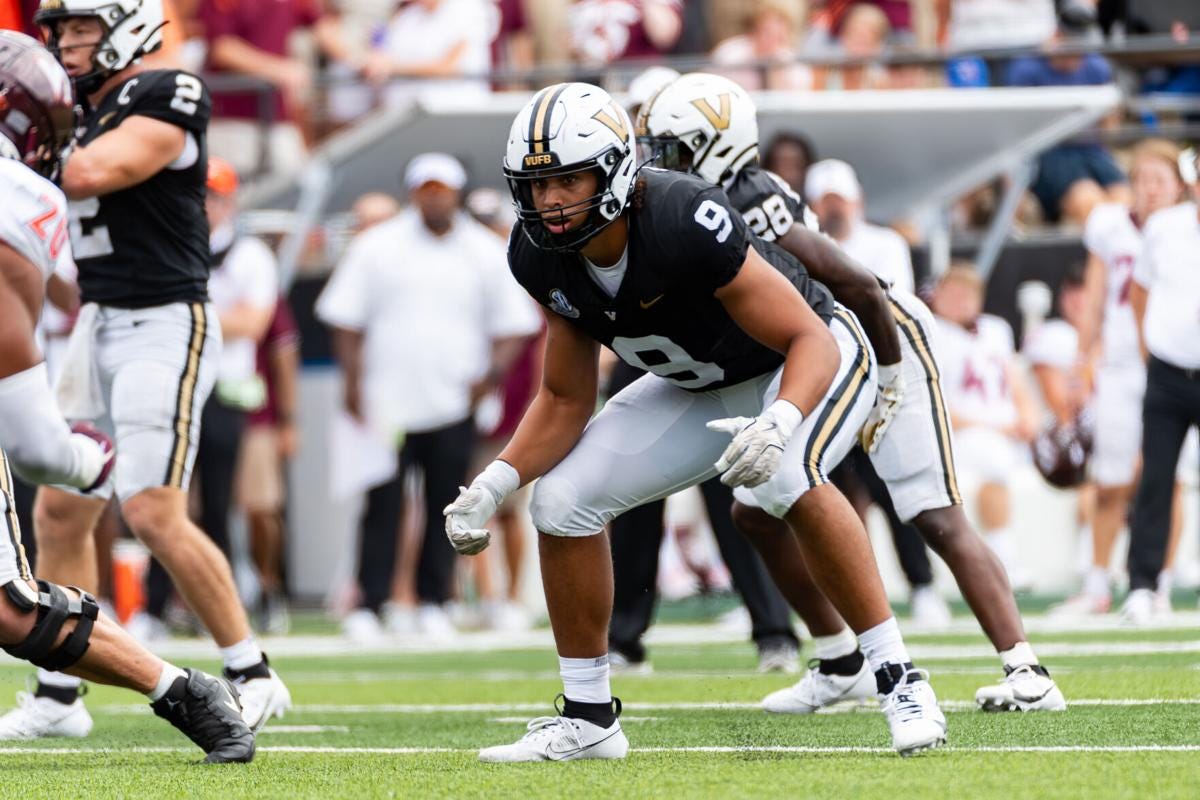
Though we’ve spent a lot of time on my process for predicting Tight Ends, hopefully it’ll be useful in explaining the nuances of this year’s class. As you’ll see, all these wrinkles are especially helpful in a dynasty class perceived by many as rather ho-hum, making my model’s standout picks that much more important to hone in on.
There’s been a lot of hemming and hawing about how top prospect Kenyon Sadiq stacks up against past years’ first-round tight ends. It should be noted that Sadiq’s claim to excellence goes far beyond draft capital, and the fact that Sadiq gets a score of 99 (i.e., better than 99% of TE’s since 2016) demonstrates just how much my model adores him, independent of his draft slot.
When you drill down into the stats, the reasons to love Sadiq are obvious, starting with his bananas vert of 43.5 inches. His catch+ rating is similarly excellent, and is definitively best-in-class by a meaningful margin. Add in the fact that he’s barely a week over 21, and he’s close to an ideal prospect, at least in my model’s eyes.
Second-place finisher Eli Stowers is no slouch either, somehow registering an even better vert than Sadiq. Though he’s punished slightly for his age, and his catch+ is surprisingly middling, his fantastic PFF grade marks him as a name to watch, and, in my opinion, should make him a slam-dunk first-rounder your rookie drafts.
Podium Hopefuls
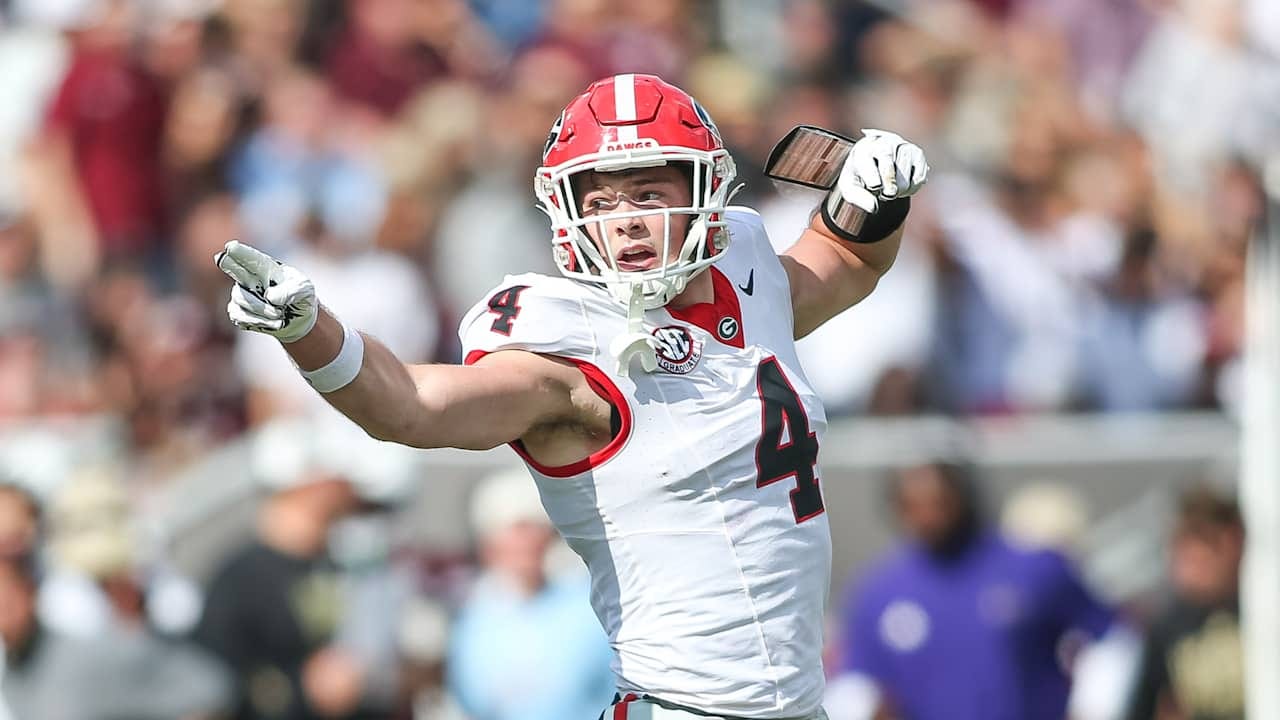
Having gone through countless iterations of my model before landing on this final version, I’ll be the first to tell you that beyond Sadiq and Stowers, the rest of the class is pretty up-in-the-air. While prior versions of the model pretty firmly favored Max Klare for the number three spot in this class, the latest update has Georgia’s Oscar Delp with a small, but not insignificant, lead.
Delp’s a tricky case, but my ceiling/floor model agrees with our main model, rating him as a high-upside, “safe” floor prospect. His profile is largely carried by his very good vert and above-average draft capital, the former being the chief reason why he leapfrogged Klare in my rankings.
Yet while Klare has a better catch rate, his lack of vert testing hurts him severely. Klare also falls just below my model’s PFF grade “sweet spot” band, which, while seemingly frivolous, was fairly extensively tested. Perhaps its strictness serves to weed out one-season wonders like Klare, who, while exceptional last year at Purdue, has been mediocre in every other context.
In any case, both are slightly above the next guy in my rankings, new Pats prospect Eli Raridon. Though a pretty similar prospect to Delp—both grade similarly, while essentially flipping vert and catch+ performance—Raridon is hurt meaningfully by his later draft capital. Yet besides their other statistical similarities, the most important thing Delp and Raridon have in common is their excellent landing spots, while Klare’s path to playing time is much trickier to project.
Ultimately, though, I think those three players are extremely similar, and I’d rather see which of them falls to me than plant my flag on one guy. If you’re looking for value, though, my model sees one more guy as belonging to this tier, despite his lackluster draft capital. Buoyed by his excellent PFF grades, Tanner Koziol is the kind of bet I’d want to make in a talent-poor draft, even if it’ll be difficult for him to break out in the crowded Jags TE room.
Best of the Rest
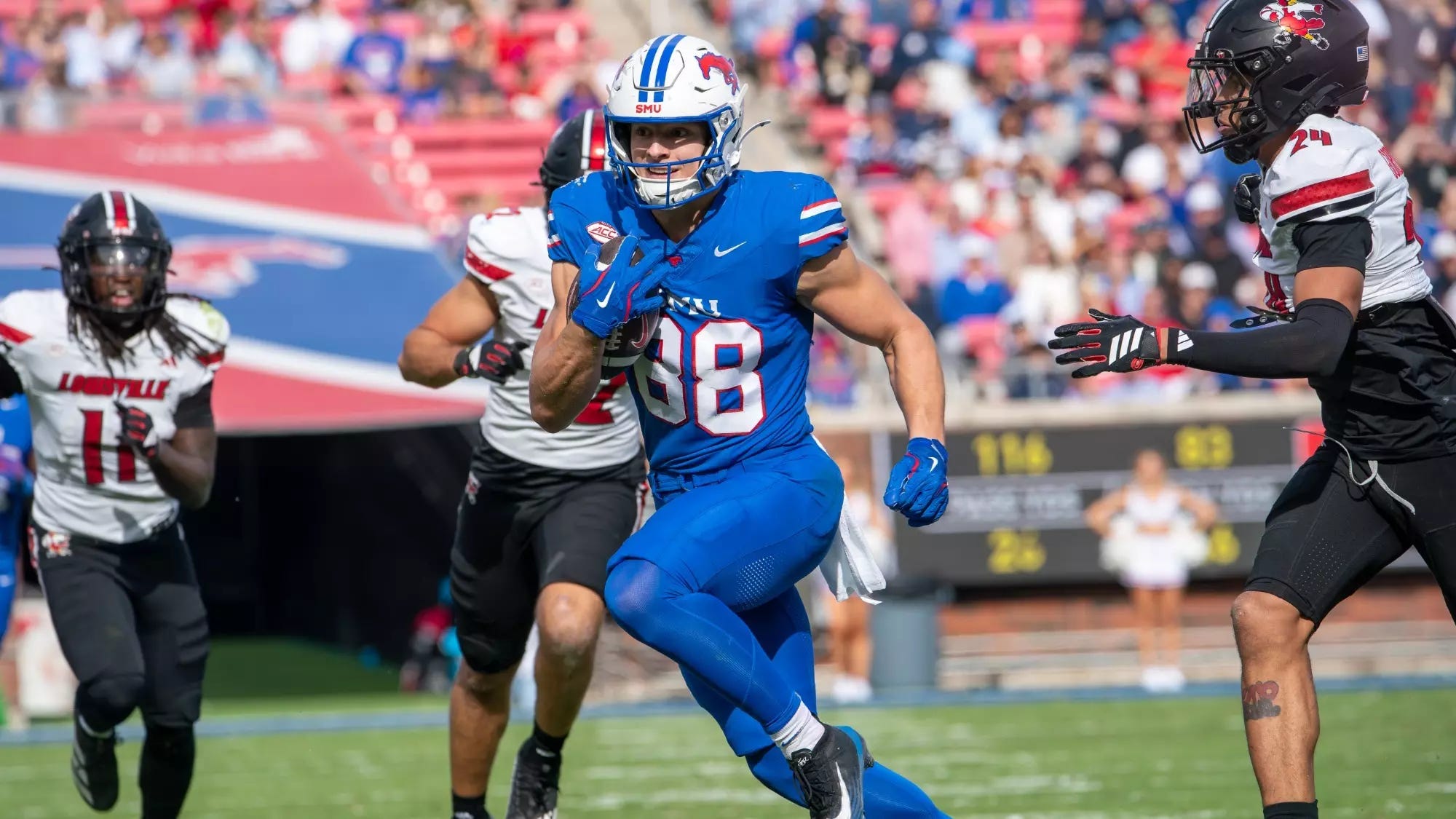
The guys below this crowded second tier, luckily, are somewhat easier to sort out. The aforementioned Justin Joly occupies a mini-tier with Chicago’s Sam Roush, largely the result of Joly’s poor (and Roush’s excellent) vert numbers. Though my model might be a bit harsh on Joly, I’d still wager the fantasy community is a bit too down on Roush, given his status as an explosive early pick.
But if you really want to see an underrated prospect, look no further than new Ravens tight end Matthew Hibner. While his status as a fourth-round pick works against him slightly, it’s important to remember that his current standing (i.e., young starter waiting for an older vet to age out) isn’t terribly different from those guys above him on this list. Hibner serves as a good reminder that pretty much all of these players not named Sadiq will likely have to sit a year or more, and if that’s the time horizon we’re considering, then I think the talented Hibner is an equally valid shot to take.
If Hibner’s mid-round status is only of mild concern, though, the same can’t be said for some late-round industry favorites. Baylor’s Michael Trigg, for example, is clearly riding too high off his pre-draft hype; even if you chalk his ludicrously low 27 inch vert up to hamstring issues, going undrafted with a miserable catch rate should be enough to take him off your big board.
I’ll instead stump for Chiefs prospect John Michael Gyllenborg who sits inside the model’s PFF grade sweet spot. His low model score is a bit deceiving, given it deliberately nerfs late-rounders and UFA’s. I wouldn’t sleep on him, given he posted a decent vert, and has obvious long-term upside as a potential Kelce replacement.
Summary
Whatever you think of my model, I can certainly say that, after spending so much time developing it, few people have thought as deeply about this tight end class as I have. This is, of course, in a strictly analytical sense; I make no claim to matching “The Beast” compiler Dane Brugler’s prospect knowledge, for example.
Yet despite having spent countless hours waist-deep in tight end data, I still only feel marginally more comfortable guessing what should happen with this class. Instead, I’m more confident predicting what won’t: your favorite undrafted free agent isn’t likely to become the next Antonio Gates, for example, just as some hyped-up fifth-rounder won’t miraculously turn into George Kittle 2.0.
Yet in away, avoiding such pitfalls is what fantasy football is all about. Dynasty is a numbers game, one defined by placing smart bets and beating the market, even if that only adds up to a series of small wins. I know enough math that I can’t guarantee you will succeed, of course, but hopefully, my predictions will give you the best shot possible at doing so.